The internet rarely shows how work is done.
Web video seldom captures the hand-level detail, the viewpoint and the exact sequence a robot needs to repeat a task reliably.
04 / Capability
TazQ provides Physical AI data: first-person (egocentric) recordings of skilled people doing real tasks, human demonstrations for robot learning, and expert annotation of video, LiDAR and multi-sensor data. Teams building robots, wearable assistants and world models use it to learn how hands, objects and environments interact.
Definition
Physical AI data is the training and evaluation data for AI systems that perceive and act in the real world, such as robots, autonomous machines and wearable assistants. It pairs recordings of how people perform tasks with precise labels for objects, hands, actions, depth and motion, so a model can connect what it sees with what it should do next.
Why it matters
Models learn to act from examples. For the physical world, the right examples rarely exist online.
Web video seldom captures the hand-level detail, the viewpoint and the exact sequence a robot needs to repeat a task reliably.
Point clouds and multi-camera streams become useful only when someone defines what each object is, where it is, and what is happening to it.
Clutter, glare, reflections and unusual objects appear in real homes, kitchens, workshops and warehouses, not in clean lab scenes.
Interactive / Annotation layers
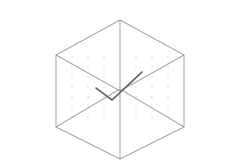
One reach-and-grasp task, captured as a 3D scene. Switch on the layers an annotation team adds, play the action, and drag to look around.
How TazQ does it
Every project follows the same four steps, shaped around the task your system must learn.
Define the activity, the environments it happens in, the variation the model must handle, and how success will be measured.
Trained contributors record tasks from a first-person view or on multi-sensor rigs, following written protocols for setup, pacing and coverage.
Objects, hands, depth, 3D cuboids and timestamped actions are labelled in separate passes, each against its own guidelines.
Expert review and agreement checks run on every batch before delivery in the formats your training pipeline already uses.
Deliverables
Formats adapt to your pipeline. These are the data types teams ask for most.
| Data | What it includes | Typical formats |
|---|---|---|
| Egocentric video | First-person recordings of real tasks, with task descriptions, environment and device metadata. | Video (e.g. MP4) with JSON metadata |
| Human demonstrations | Complete task executions for imitation learning, segmented into steps and synchronised with sensor logs. | Video, step segments, sensor logs |
| Hand and body pose | Frame-by-frame keypoints and tracks for hands and bodies, including occluded moments. | Keypoint JSON (e.g. COCO-style) |
| Object and scene labels | 2D boxes, segmentation masks and 3D cuboids for objects, surfaces and free space. | COCO, mask files, cuboid JSON |
| LiDAR and point clouds | 3D cuboids, semantic point labels and object tracks across frames. | Point cloud files (e.g. PCD, LAS) with labels |
| Action and intent labels | Timestamped verbs, objects and goals, such as “grasp mug” or “open drawer”. | Timeline JSON or CSV |
| Evaluation sets | Held-out scenarios and human judgments for testing robot policies and world models. | Scenario specs with scored results |
Use cases
Manipulation in cluttered, real homes: grasping, opening, sorting and tidying, demonstrated by many people across many spaces.
Picking, packing and inspection footage with object labels and the failure cases that busy, imperfect environments produce.
Long, varied first-person sequences with action labels, so models learn what tends to happen next and why.
Egocentric video with hands, attention and intent, so an assistant understands what the wearer is doing and what they need.
Quality & experts
Contributors are prepared through TazQ Academy before they record or annotate, so protocols are followed the same way across people and places.
Explore TazQ AcademyParticipants know how their recordings will be used, and faces, screens and personal details in the background are anonymised before delivery.
Every batch passes automated checks and expert review against written guidelines. Agreement is measured, and what reviewers learn feeds back into the guidelines.
FAQ
Egocentric data is video recorded from a first-person point of view, usually with a head- or chest-mounted camera, so it shows what a person sees while their hands work. It is the closest viewpoint to a robot’s or a wearable device’s own camera, which makes it especially useful for learning manipulation and everyday tasks.
Computer vision data often labels single images. Physical AI data follows a task through time and space: it links objects, hands, depth, 3D position and actions across a sequence, often from several sensors at once, so a model can learn what to do, not only what it sees.
Projects can include RGB and depth cameras, multi-camera rigs, LiDAR and motion sensors. Data is delivered in the formats your pipeline uses, for example video with JSON metadata, COCO-style annotations or labelled point cloud files.
Yes. Each project is scoped around the environments your system will operate in, such as homes, kitchens, workshops, retail spaces or industrial sites, and around the variation it must handle, from lighting to clutter to object types.
Participants take part with informed consent, and recordings are reviewed so that faces, screens and personal details that are not part of the task are anonymised before delivery.
Each layer has written guidelines and reference examples. Batches are checked automatically and reviewed by experts, agreement between annotators is measured, and results are reported with every delivery.
Share the task, the target environment, the sensors you use and the volume you expect. A small pilot dataset then validates the protocol, guidelines and format before the project scales. You can outline all of this in the project brief below.
Related capabilities
Start your Physical AI project
A better model starts with a clearer question.
What do you want yours to understand?
Scope your project in about a minute. A specialist reads every brief and replies with next steps.
Experts join through TazQ Academy.
The Academy prepares specialists for TazQ projects and matches them to work in their field.
Explore TazQ Academy